
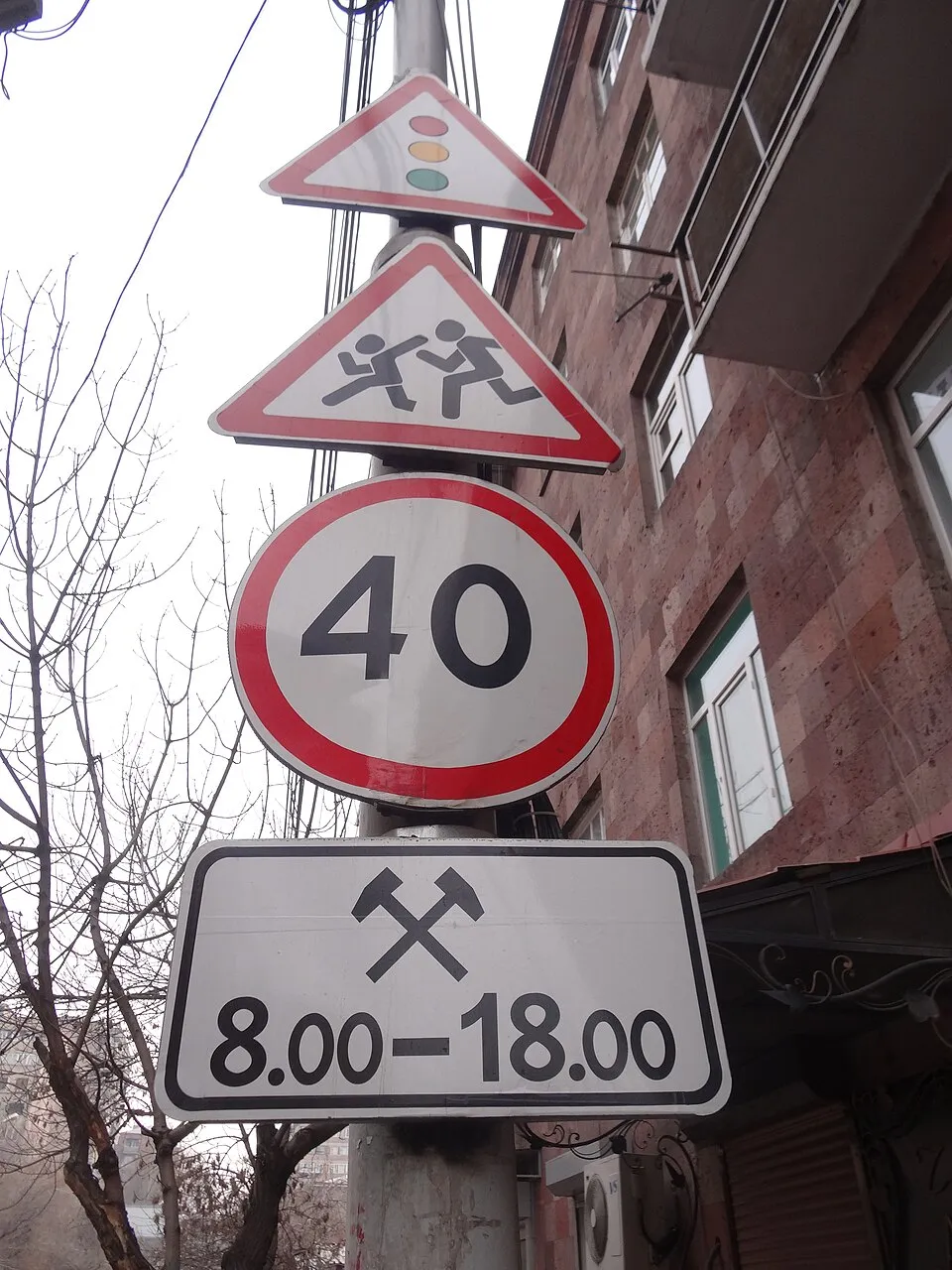
Road signs in Armenia are similar to the signs of other post-Soviet states and most European road sign systems, establishing a standardized visual language for motorists across the country. Armenia is a proud signatory of both the Vienna Convention on Road Traffic and the Vienna Convention on Road Signs and Signals, ensuring international compatibility.
The regulatory framework is overseen by institutional authorities, where the Ministry of Transport carefully regulates these icons to maintain safety standards, while the national police strictly enforce them on roadways. This dual oversight helps keep traffic flowing smoothly while minimizing potential hazards for both local drivers and international visitors.
Related Stories

Get the Latest Sports News from Seymour's Bird
Receive the latest updates on football, basketball,and technology news directly in your inbox. It's free!
SubscribeThe rules for the use of road signs and their specific technical requirements are governed by established Russian standards such as GOST R 52289-2019 and GOST R 52290-2004, alongside the vital interstate standard GOST 32945-2014. These comprehensive guidelines dictate everything from placement height to retroreflectivity requirements.
To ensure clear communication for everyone on the road, all official traffic signs are inscribed in both Armenian and English. This bilingual approach accommodates the growing number of international tourists and foreign transport operators navigating the country's scenic and mountainous routes.
Standardized Categories and International Compliance
Armenian roadways feature a wide array of standardized categories, ranging from essential warning signs and priority markers to strict prohibitory traffic signs. Dangerous curves, steep hills, and narrow passages are marked clearly with universal symbols designed for split-second comprehension.
Priority signs such as yield and stop indicators dictate the flow of complex intersections, minimizing confusion and reducing the likelihood of urban and rural collisions. Meanwhile, mandatory and special regulation signs guide drivers on designated routes and minimum speed expectations.
Prohibitory signs enforce strict limitations on vehicle types, weights, axle loads, and dimensions, protecting critical infrastructure like bridges and mountain passes from excessive wear. Speed limit variations are posted clearly to match the engineering design of each specific stretch of highway.
By adhering closely to these international and interstate standards, Armenia maintains a modern transport network that seamlessly integrates with neighboring regional systems while prioritizing the safety of everyday commuters.