
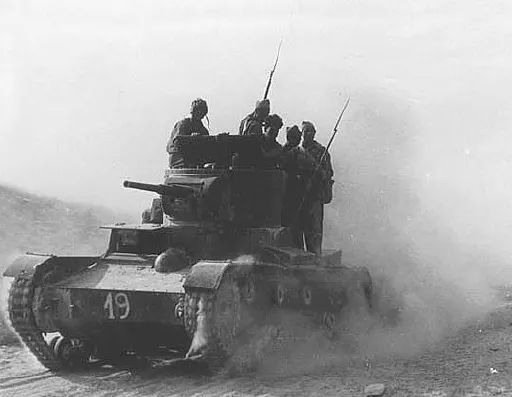
The Spanish Civil War stands as a defining conflict in modern European history, erupting in 1936 as a bitter struggle between the Republican government and Nationalist rebels led by General Francisco Franco. This momentous clash divided the nation along deep ideological, political, and social fault lines that would resonate for decades to come.
"The war was variously viewed as class struggle, religious struggle, or struggle between republic and democracy and dictatorship, revolution and counterrevolution, or between fascism and communism," historical accounts note regarding the complex international and domestic pressures surrounding the conflict.
Related Stories

Get the Latest Sports News from Seymour's Bird
Receive the latest updates on football, basketball,and technology news directly in your inbox. It's free!
SubscribeThe conflict began following the partial failure of the coup d'état of July 1936 against the Popular Front government by a faction of military generals. The resulting division left Spain militarily and politically fractured, drawing international attention and foreign involvement from major global powers of the era.
While the Nationalist forces received vital munitions, soldiers, and air support from Fascist Italy and Nazi Germany, the Republican government secured backing from the Soviet Union and Mexico. Meanwhile, major democratic nations pursued policies of non-intervention, though tens of thousands of foreign volunteers still joined the pro-Republican International Brigades.
Roots of Conflict and the Fall of the Republic
As the Nationalist forces steadily advanced and internal political fractures deepened within the Republican leadership, the military position of the government became increasingly untenable. General Franco ultimately declared victory on April 1, 1939, establishing a dictatorship that endured until his death in November 1975.
The roots of the 1936 conflict trace back through years of intense political instability, shifting regimes, and deep-seated socioeconomic grievances following the establishment of the Second Spanish Republic in 1931. Popular aspirations for sweeping reform frequently clashed with entrenched conservative, monarchist, and military interests.
Economic turmoil during the Great Depression further intensified class struggles across rural and urban areas, as agrarian reforms and labor policies met fierce resistance from landowners and employers" associations. These compounding pressures steadily eroded the stability of the democratic government.
Anti-clerical violence, frequent strikes, and failed early uprisings contributed to a radicalization of both the political left and right. Monarchist circles and emerging fascist movements actively conspired to subvert the democratic framework, laying the financial and military groundwork for future rebellion.