
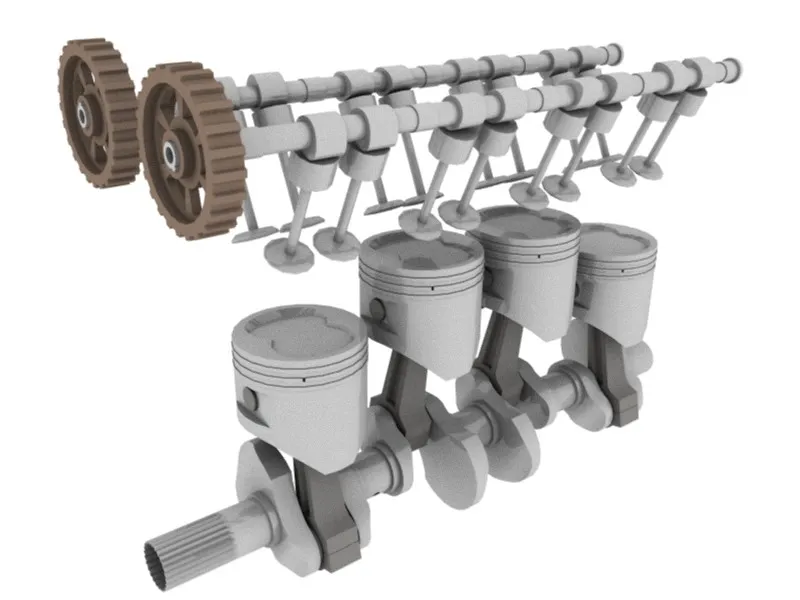
Straight-four engine technology continues to dominate the global automotive landscape, serving as the power plant of choice for approximately 60 percent of new vehicles as of the 2025 model year. This widespread adoption has accelerated significantly since 2005, driven by tighter fuel economy standards and stricter global emissions regulations that favor smaller, turbocharged configurations.
Arranged in a line along a common crankshaft, the inline-four layout offers a simpler single-cylinder-head design compared to V4 or flat-four alternatives, thereby reducing production costs and mechanical complexity. Furthermore, a four-stroke straight-four engine maintains continuous power delivery with a cylinder constantly on its power stroke, distinguishing it favorably from engines with fewer cylinders.
Related Stories

Get the Latest Sports News from Seymour's Bird
Receive the latest updates on football, basketball,and technology news directly in your inbox. It's free!
SubscribeDespite its structural simplicity and near-perfect primary balance, the layout inherently produces a secondary imbalance caused by differing piston acceleration rates during crankshaft rotation. To mitigate the resulting vibrations in larger displacement variants, engineers frequently employ balance shaft systems featuring dual eccentric weights rotating at twice the crankshaft speed.
Beyond traditional passenger cars, the versatility of the inline layout spans across various industries, powering everything from compact kei cars in Japan to heavy-duty European and Asian commercial trucks. Its enduring legacy across motorsports, motorcycles, and everyday transit highlights its remarkable adaptability and engineering resilience in a changing industry.
Evolution of Inline Four Engines in Racing and Culture
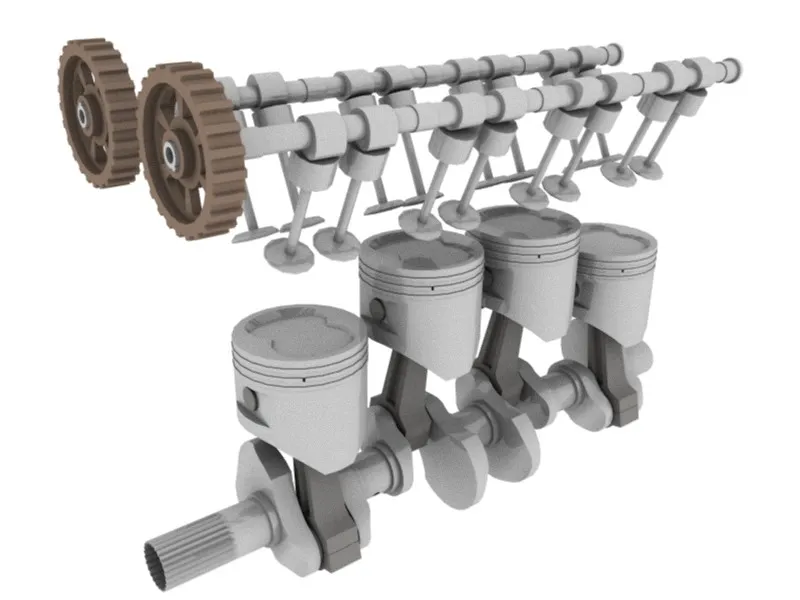
The historical impact of the inline-four extends deeply into the world of motorsport, where pioneering designs have shaped high-performance engineering for over a century. Notably, the Peugeot engine that claimed victory at the 1913 Indianapolis 500 introduced double overhead camshafts and four valves per cylinder, establishing a layout blueprint still used in racing today.
Legendary racing powerplants like the Offenhauser engine dominated American open-wheel competition for decades, securing numerous consecutive victories at the Indianapolis 500. Similarly, European racing icons utilized robust straight-four configurations to conquer Formula One championships and endurance events, proving that inline architectures could deliver championship-winning performance.
In the motorcycle sector, the inline-four configuration revolutionized street biking following the introduction of milestone models like Honda's SOHC CB750 in 1969. Offering an exceptional performance-to-cost ratio, it quickly became a dominant staple for major manufacturers across street bikes and competitive racing circuits alike.
As automotive technology marches forward, the straight-four engine remains a vital piece of engineering history and current innovation. Through continuous refinement in valve timing, forced induction, and vibration control, this classic layout secures its position at the heart of modern vehicular propulsion.