
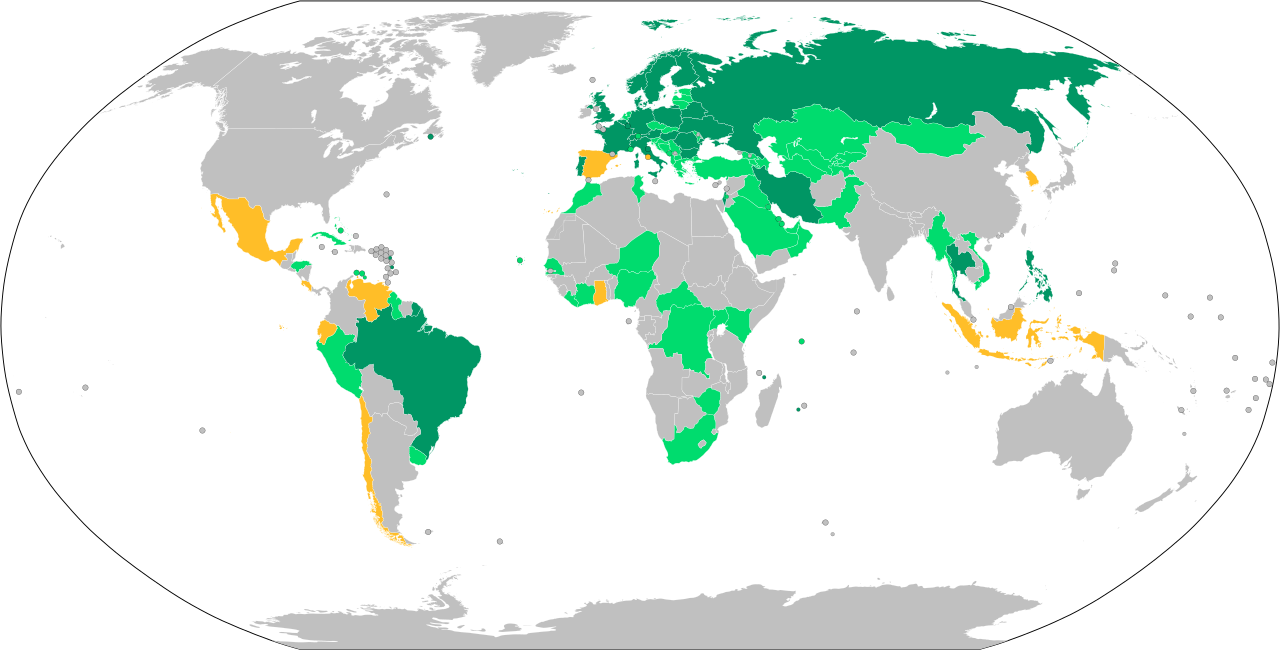
Vienna Convention on Road Traffic standards continue to serve as the baseline for international transport, establishing unified rules to enhance road safety across dozens of member nations. Concluded under the United Nations Economic and Social Council in November 1968, the treaty replaced previous agreements like the 1949 Geneva Convention to streamline cross-border travel.
Signatory countries, numbering 86 as of recent data, enjoy mutual recognition of vehicle legality and standardized driving permits, though notable non-signatories like the United States and Canada rely on alternative frameworks. This foundational recognition allows motorists to cross international borders smoothly while adhering to minimum mechanical and safety requirements defined by the treaty.
Related Stories

Get the Latest Sports News from Seymour's Bird
Receive the latest updates on football, basketball,and technology news directly in your inbox. It's free!
SubscribeThe ongoing digital and technological revolution has pushed the treaty to adapt, notably through proposed amendments addressing autonomous driving and automated driving systems. While traditional principles mandate that a driver must always be fully in control, modern updates seek to incorporate hardware-software combinations capable of handling dynamic real-time traffic control safely.
International Driving Permits regulated under Annex 6 and Annex 7 further simplify global mobility, ensuring validity structures are uniform across participating regions. These rigorous frameworks balance technological innovation with strict adherence to domestic legislation, securing a safe future for drivers worldwide.
Adapting International Traffic Rules for Autonomous Driving

Autonomous driving integration represents one of the most significant modern shifts for the decades-old Vienna Convention framework, challenging traditional liability concepts. Proposed amendments have formally introduced definitions for automated driving systems, outlining clear parameters for hardware and software execution of tactical and operational road maneuvers.
Regulatory adjustments dictate that automated systems must comply with domestic technical regulations and national operational laws within the territory where they operate. This ensures that while vehicles exercise sustained dynamic control, legal accountability and compliance remain tightly anchored to national safety standards.
The transition toward automated transport highlights the treaty's remarkable flexibility, transforming a document originally conceived for manual motor vehicles into a forward-looking guide for smart mobility. Experts note that these updates are vital for preventing legal grey areas as automotive technology outpaces legacy infrastructure.
Ultimately, the Vienna Convention on Road Traffic proves that international cooperation can successfully bridge traditional motoring traditions with cutting-edge innovations, safeguarding global travelers as they navigate the future of transportation.